
Burbank Previous Resident Sources
A Burbank address has several timelines. The Cook County Clerk's recording index follows title transfers, while the Assessor and CookViewer describe the present parcel. Directories and the federal census can identify a dated household, including people who did not hold title. Municipal files begin only after Burbank became a city and have no published, complete address index. Choose the source by the year in question, then keep ownership evidence apart from occupancy evidence.
| Source | Years It Covers | Where Held | What It Shows |
|---|---|---|---|
| Cook Clerk real-estate index | 1985 to present online | Clerk Recordings; older tract books downtown | Grantor, grantee, instrument, date, PIN, and legal description |
| Cook deed microfilm lead | Circa 1872 to 1886 | FamilySearch catalog or affiliate access | Earlier instruments and legal-description clues |
| Regional city directories | 1839 to 1929, with gaps | SSGHS, Newberry, and Chicago History Museum | Dated names, addresses, and householder labels |
| Federal census | Publicly released through 1950 | NARA, HeritageQuest, and regional libraries | Historical household members and relationships |
| Burbank municipal records | City incorporated in 1970 | City departments, Agenda Center, and FOIA | Permits, zoning, incidents, and council references |
| CookViewer parcel archive | 2000 to present | CookViewer history controls | Parcel shape, imagery, tax, and district context |
For a recent transfer, start with the current PIN and the recording index. For a date before online deeds, preserve the subdivision and legal description before moving to tract books or microfilm. A mid-century question may call for directories, census pages, newspapers, and utility or permit clues. Prairie Trails Public Library offers reference databases, interlibrary loan, and phone help, but its public pages do not claim a Burbank-only directory run.
PIN First for Burbank Addresses
The modern street line is a useful entry point, but the 14-digit Property Index Number is the stronger bridge between parcel systems. Search the Cook County Assessor address form with house number, street name, and city. Copy the PIN, township, property location, and current owner or taxpayer exactly. The office warns that its property location is not a legal or postal mailing address, so label each address by its source.
Next, check the tax mailing address and legal description. A mailing address outside Burbank does not prove that the parcel is vacant or occupied by someone else. Likewise, a homeowner exemption is only a tax signal. It is not conclusive proof that a named person lived there on the date being studied.
- PIN
- The 14-digit Cook County parcel identifier, which should be kept with leading zeroes.
- Situs address
- The physical property location used by a record system, which may differ from a mailing address.
- Legal description
- The subdivision, lot, block, and related land wording that can survive a street-name or postal change.
Burbank Deeds Before 1985
Cook County's verified online real-estate index begins in 1985. That is only a digital cutoff. Earlier deeds still exist through tract books, deed books, plats, microfilm, and archive routes. The Cook County Clerk recording search is the official current entry point, and the older tract books are arranged by subdivision at 118 N. Clark Street, Room 120, Chicago.
The Clerk does not perform open-ended historical research for the public. Arrive with a PIN, legal description, subdivision, a rough year, and at least one party name when possible. The recording help desk is 312-603-5050. Older references may say Recorder of Deeds, but that office was consolidated into the County Clerk in December 2020.
The official recording search is visible in the captured source below.
Open the Cook County recording search source.
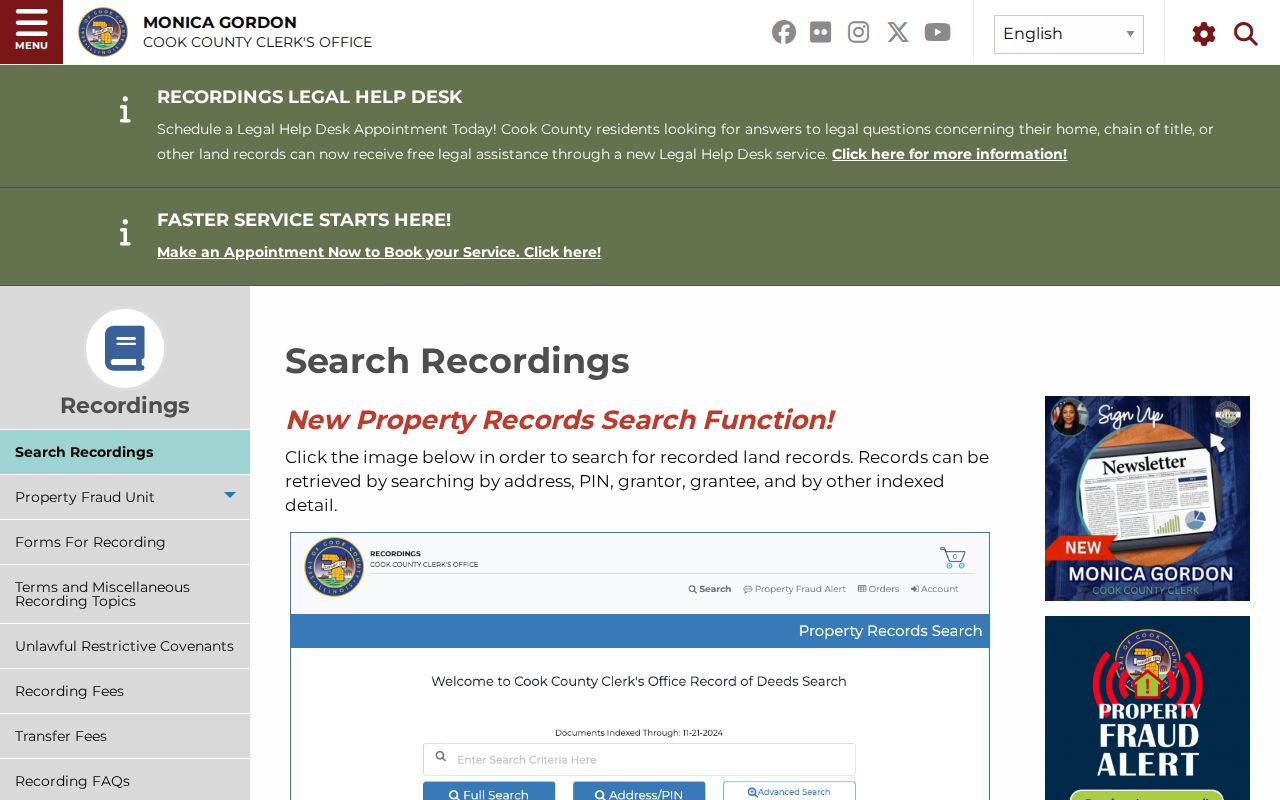
The screen is a starting point for indexed instruments. Keep a copy of each result before following the prior owner backward.
Note: Recheck current access and copy fees before ordering an instrument, since the inspected fee schedule took effect in 2024.
Trace Burbank Owners Backward
A chain of title is the linked sequence of transfers for the same land. Begin with today's parcel, not a loose name search. In each deed, the grantee is the person or entity receiving an interest and the grantor is the person or entity giving it. Moving backward means finding the current owner's purchase, then searching for the seller's earlier purchase under the same PIN or legal description.
- Pull the current PIN, owner or taxpayer, situs address, and legal description from the Assessor record.
- Find that owner's purchase instrument in the Clerk index. Record the document number, execution and recording dates, document type, parties, and PIN.
- Search the seller as a grantee to locate that party's earlier acquisition. Confirm the land with the PIN, subdivision, lot, or legal text.
- Repeat one transfer at a time. Note trusts, estates, corrections, mortgages, releases, and transfer-on-death instruments without treating each party as an occupant.
- At the 1985 online boundary, take the legal description to the downtown tract books or a suitable microfilm and archive route.
- Grantor / grantee
- The grantor conveys an interest; the grantee receives it.
- Chain of title
- The documented sequence of ownership transfers for the same parcel.
- Instrument
- A recorded deed, mortgage, release, plat, or other document identified by its recording number.
A deed proves a recorded property interest, not residence. A buyer may be a trust, an estate may sell, and a lender listed on a mortgage is not a past resident. Add occupancy evidence before describing anyone as someone who lived here before.
Previous Residents Before Burbank
Burbank incorporated on April 4, 1970. Older records may place the same area in Stickney Township, South Stickney, a subdivision, or a regional Chicago directory. The city's official history traces the area from southeastern Lyons Township through the State Road plan, Stickney Township, 1920s subdivision growth, and the mid-century sanitation and road build-out. Searching only the modern city name can therefore miss the right record.
This local history also tells the researcher where to look. County land and township material are stronger for the rural and early subdivision eras. Sanitary-district, utility, road, newspaper, and permit evidence becomes more useful during the 1950s build-out. Post-incorporation address files may sit with Burbank departments, but the City has not published a complete permit-by-address index or a stated historical cutoff.
Burbank House History Layers
Title is only one part of an address story. The Chicago History Museum house-history method combines permits, Sanborn fire-insurance maps, photographs, newspapers, directories, and street-number checks. No Burbank-specific Sanborn year list was verified, so use that method as a regional research plan and confirm that the map sheet covers the address and year.
Review the museum's house-history source.
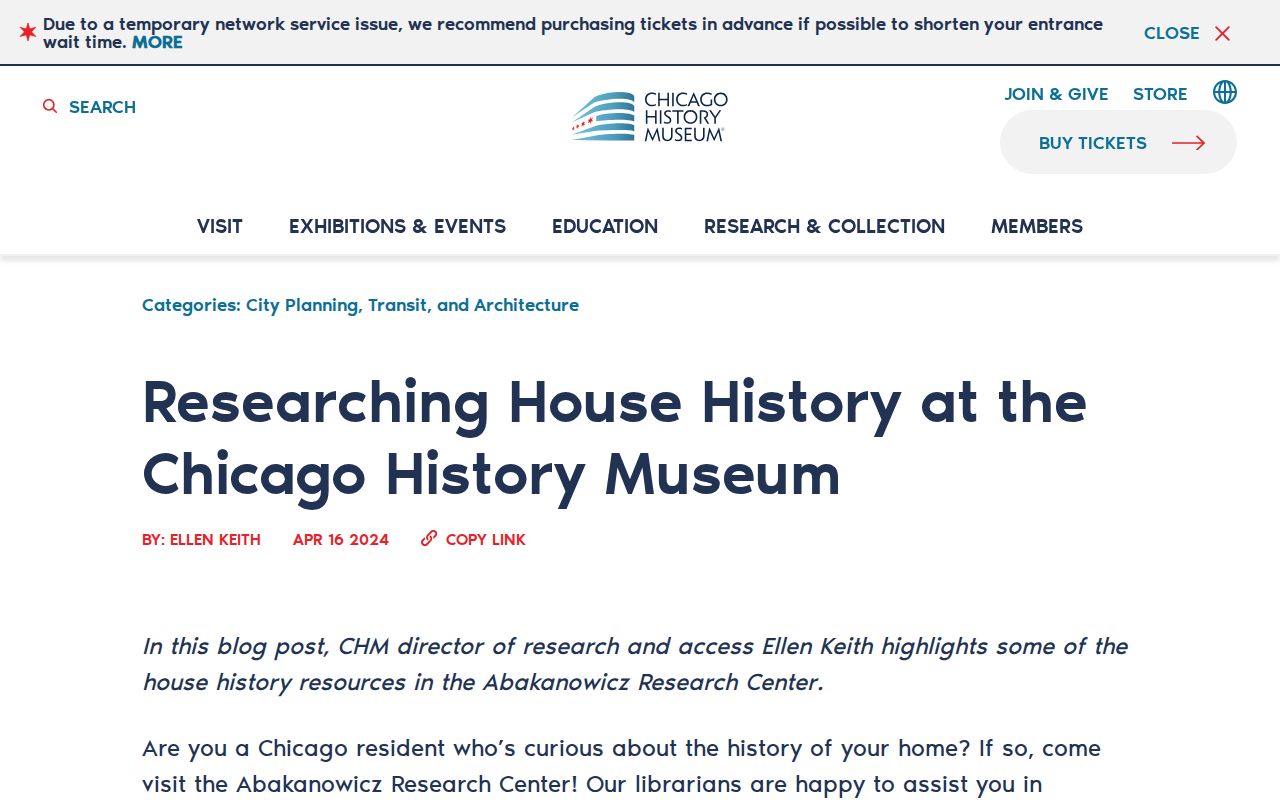
The source helps date changes to a building, but a permit applicant or map symbol is not proof of every person who occupied it.
Burbank's Building Department keeps permit and zoning material, yet its public page does not provide an address-searchable archive. A narrow Illinois Freedom of Information Act request can name the property, date range, and permit or inspection type. Permit files date work, owners, applicants, and contractors. They do not form a full roll of previous residents.
Pair Burbank Directories and Census
Regional directories give dated address listings, while released federal census schedules can show a household at one point in time. Neither is continuous. The strongest routine is to bracket a census year with the closest available directory or newspaper dates, then compare spelling, address, family relationships, and the deed timeline.
- Pick a deed, permit, or dated news item that anchors the address to a narrow period.
- Search the nearest regional directory year, recording its geographic scope and the address exactly as printed.
- Find the matching census enumeration district and household when that census year is publicly released.
- Compare the household with a second directory, obituary, cemetery index, church record, or probate file.
- Label each conclusion as owned, listed at, boarded at, or otherwise mentioned, rather than merging those roles.
The historical collections themselves, including their gaps and access terms, are covered on the Burbank city directory page. Here they serve one task: identifying past residents at one address.
Regional Sources for Burbank Residents
Prairie Trails Public Library databases include HeritageQuest, historical Chicago Tribune coverage, Daily Southtown and other Chicago-area news tools. Some access requires a library card or an in-library session. The library also offers phone reference, interlibrary loan, copying, and research help. Ask about an exact street, year, paper, yearbook, or map instead of requesting an unrestricted resident search.
The South Suburban Genealogical and Historical Society lists directories, regional phone books, yearbooks, maps, census material, a large cemetery index, and the Blue Island Sun obituary index. Its site currently reports a storm-related closure, so verify status before travel. Newberry and the Chicago History Museum add regional directories and street guides, but none should be described as a continuous Burbank series.
Close a Burbank Resident Trail
Owners are only half the story. A directory, census page, yearbook, church record, or newspaper can place other household members at an address on a stated date. The public federal census currently reaches through 1950 under the 72-year release rule. Prairie Trails and SSGHS provide regional routes, and FamilySearch catalogs Cook County marriages, early deeds, and probate material with access that may depend on an account or affiliate library.
Obituaries and probate can explain where a trail ends. SSGHS lists a Blue Island Sun obituary index for 1919 through 1969, cemetery records, burial permits, and funeral-home material. A probate docket may identify an estate and heirs, while a death or cemetery record supplies another date and family link. These sources can confirm a past household but do not establish anyone's current address.
Lawful use. Research previous residents for house history, genealogy, estate work, or personal curiosity. Never use a dated record to track, harass, or harm a living person.
Stop when the next step requires a protected address, private utility account, sealed file, or household roster. Record the source date and uncertainty instead. Illinois' Address Confidentiality Program can shield new state and local records for eligible survivors, and a missing public entry must never be treated as proof of location.